You Hired the Wrong Professional. Here Is How It Happens.
You finally decide to transform your living room. You book someone who calls themselves an “interior specialist.” Months later, the furniture is beautiful, but the room still feels cramped, the lighting is wrong, and the traffic flow is a daily frustration.
The problem was not their taste. The problem was that you needed an interior designer and hired a home stylist instead.
These two professions are used interchangeably online, in listings, and even by some professionals themselves. That confusion costs homeowners time, money, and results in a loss that misses the mark entirely.
This guide draws a clear line between the two, so you hire the right person for your actual situation.
TL;DR: Difference Between Home Styling and Interior Design
Interior design is a regulated profession focused on the structural, functional, and spatial planning of a room or building. Home styling is a creative service focused purely on aesthetics, decor, and visual presentation. The key difference lies in scope: interior designers reshape how a space works, while home stylists transform how it looks.
What Is Interior Design?
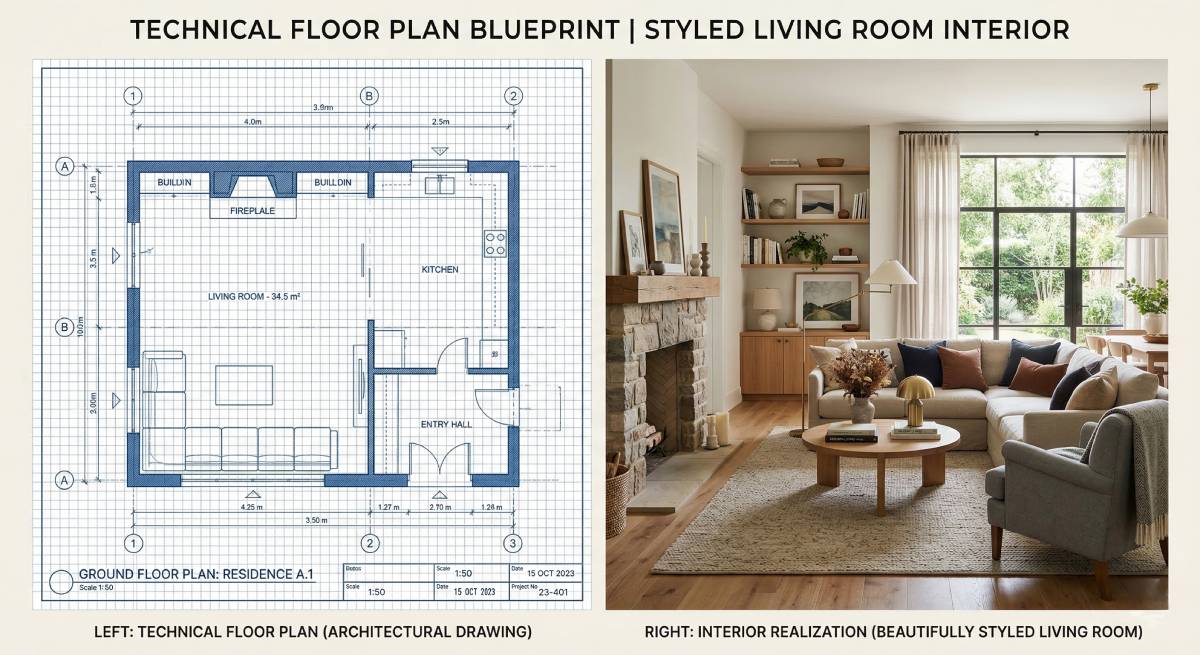
Interior design is a professional discipline that addresses both the function and the form of a space. It is one of the few creative fields that intersects with architecture, construction, and building regulations.
A qualified interior designer does not just choose paint colours. They analyse how people move through a space, plan structural modifications, coordinate with contractors and architects, and ensure every design decision meets safety and building codes.
Interior designers typically handle:
- Spatial planning and floor plan layout
- Structural changes, such as removing walls or repositioning doorways
- Specification of built-in furniture, cabinetry, and joinery
- Lighting design, including electrical placement
- Material selection (flooring, tiling, wall finishes)
- Project management across contractors and tradespeople
- Compliance with local building codes and regulations
Interior design is a long-term, process-driven engagement. Most residential projects run from three months to well over a year from concept to completion.

What Qualifications Do Interior Designers Hold?
In many countries, the title “interior designer” is protected or professionally governed. In the United States, designers can become NCIDQ-certified. In the UK, professional membership with the BIID (British Institute of Interior Design) sets the standard. Most hold a bachelor’s or master’s degree in interior design or a closely related field.
This level of formal training matters because they are often making decisions that affect structural integrity, electrical systems, and fire safety.
What Is Home Styling?
Home styling, sometimes called interior styling, is a purely visual and decorative service. A home stylist works with what a space already has, or sources new pieces to create a cohesive, beautiful look without touching anything structural.
Think of a home stylist as a curator. They work with furniture, textiles, artwork, plants, lighting fixtures, and accessories to create an atmosphere that feels intentional and polished.
Home stylists typically handle:
- Furniture sourcing and arrangement
- Colour palette and texture selection
- Accessory curation (cushions, throws, rugs, artwork)
- Lighting mood (lamps and ambient fixtures, not electrical wiring)
- Seasonal or occasion-based restyling
- Home staging for property photography or sale
- Social media and editorial shoot styling
A home styling project is usually faster and more affordable. Engagements can range from a single-day consultation to a few weeks for a full-home refresh.

Is Home Styling the Same as Interior Decorating?
Largely yes, though “interior decorating” tends to be the older, more traditional term. Home styling carries a more modern, editorial, and social-media-influenced connotation. Both focus on the visual layer of a space without structural involvement.
Comparison: Interior Design vs Home Styling
| Factor | Interior Design | Home Styling |
| Core focus | Function, structure, and aesthetics | Aesthetics and visual presentation only |
| Structural changes | Yes, can oversee renovations | No structural involvement |
| Qualifications | Degree and professional accreditation typical | No formal requirement; portfolio-based |
| Project duration | 3 months to 2 years | 1 day to 4 weeks |
| Typical cost | £5,000 to £50,000+ (UK); $8,000 to $80,000+ (US) | £500 to £5,000 (UK); $800 to $8,000 (US) |
| Works with contractors | Yes, central to the role | Rarely |
| Best for | Renovations, new builds, spatial problems | Refreshing a finished space, staging, restyling |
| Building code knowledge | Required | Not required |
Where the Two Roles Overlap
The boundary between these professions is not always a hard wall. Many talented professionals operate in both spaces, and the industry has evolved to reflect that.
Some interior designers offer a lighter “soft furnishings” service for clients who do not need structural work. Some highly skilled home stylists have developed enough spatial awareness to give layout advice that rivals a designer’s input.
The overlap zone includes:
- Furniture layout and spatial arrangement
- Colour consulting and material selection
- Mood board and concept development
- Lighting atmosphere (fixture selection, not wiring)
If a professional offers services in both areas, ask directly about their background, qualifications, and what they cannot do. A stylist cannot legally oversee a structural renovation, regardless of how talented they are.
Which One Do You Actually Need?
This is the question that most articles skip. Here is a straightforward framework.
You need an interior designer if:
- You are planning a renovation, extension, or new build
- You want to remove or add walls, change the layout, or alter structural features
- You are building or specifying bespoke or fitted furniture
- You need someone to manage contractors and a project timeline
- Your space has functional problems that furniture alone cannot fix
You need a home stylist if:
- Your space is structurally sound but lacks personality or cohesion
- You want to refresh the look without any building work
- You are preparing your home for sale or professional photography
- You need help sourcing furniture and accessories that work together
- You have a short timeline or a limited budget
A practical example that illustrates the distinction well: if you want to design your ideal BBQ area in your garden or outdoor space, the project quickly reveals which professional you need. Planning the layout, specifying drainage, installing built-in cabinetry, running gas or electrical connections, and choosing weather-resistant materials is interior and architectural design work. Choosing the outdoor furniture, styling the table settings, selecting the planters, and creating the overall atmosphere is home styling. One project, two distinct layers of expertise.
You may benefit from both if:
- You are completing a renovation (designer) and then want the finished space dressed to perfection (stylist)
- You are building a new home and want professional staging before you move in or list it
Studios like 3Xi Studio have built their offering around exactly this combined approach, providing clients with end-to-end support that covers both the structural design phase and the final styling layer, so the transition between contractor handover and a fully lived-in space feels seamless rather than disjointed.
A Note on Cost and Value
One of the most common misconceptions is that interior designers are always more expensive and therefore only for luxury projects. Cost scales with scope, not prestige.
A one-room interior design consultation might cost less than a full-home styling service. Conversely, a high-end stylist working on a penthouse shoot can charge more per day than a regional interior designer charges per week.
Always ask for:
- A clear scope of work in writing
- A breakdown of fees (flat fee, hourly, or percentage of project budget)
- Clarity on whether purchasing and sourcing is included or billed separately
- References or portfolio work specific to your project type
Spending time upfront asking these questions protects you from the most common and costly mistake in this space: paying for a service that was never designed to solve your actual problem.
Key Takeaways
- Interior design addresses function, structure, and aesthetics through a formal, regulated, and often construction-adjacent process.
- Home styling addresses visual presentation through furniture, accessories, and decor without structural involvement.
- The decision comes down to your space: does it need to work differently, or does it simply need to look better?
- Both professionals have real, distinct value. The key is matching the service to the problem.
- Always verify qualifications, ask for a clear scope, and do not assume one title means the same thing across every professional.
Conclusion
The confusion between interior design and home styling is understandable. Both professions create beautiful spaces, both require a trained eye, and many talented people work across both disciplines. But the difference in scope, qualification, and outcome is significant enough that choosing the wrong one can cost you thousands and leave the core problem unsolved.
If you are looking for a team that genuinely understands where design ends and styling begins, 3Xi Studio is a strong example of a practice that brings clarity to that boundary, working with clients through every phase rather than handing off mid-project and hoping for the best.
Before you book anyone, ask yourself one question: Does my space need to function better, or does it just need to look better? Your honest answer to that will point you directly to the right professional.
Here is something worth considering: as the interior industry continues to grow and social media blurs the lines between design and styling further, do you think clearer industry regulation would protect consumers, or would it limit the creativity that makes both professions valuable?
Frequently Asked Questions
1. Can a home stylist do the same job as an interior designer?
No. A home stylist can transform the visual appearance of a finished space, but they are not qualified to oversee structural changes, manage contractors, or ensure compliance with building regulations. If your project involves any construction or layout changes, you need a qualified interior designer.
2. Is home styling the same as home staging?
They are closely related but not identical. Home staging is a specific type of styling carried out with the goal of making a property more appealing to buyers or tenants, often for photography or viewings. General home styling is done for the person who lives in the space, with no sale intention required.
3. How much does a home stylist cost compared to an interior designer?
Home styling is generally the more affordable option. In the UK, a stylist consultation starts around £300 to £500, while a full-service interior design project rarely comes in under £5,000 and often exceeds £20,000 for a full renovation. Costs vary widely based on location, experience, and project scope.
4. Do interior designers need a license to practice?
This depends on the country and sometimes the state or region. In parts of the United States, the title “interior designer” is legally protected and requires licensure. In the UK, the title is not legally protected, but membership with professional bodies like the BIID is considered the industry benchmark. Always ask a designer about their credentials before hiring.
5. Can one person be both an interior designer and a home stylist?
Yes, and many experienced professionals are. Some interior designers offer a styling service as the final layer of a completed project. Some stylists have developed strong spatial skills over time. When hiring someone who claims both, ask to see portfolio work specific to the type of project you need, and confirm their technical qualifications if structural work is involved.